
Collector’s guide
Looking closely: portraiture and abstraction
A short looking guide using paintings in the current collection, from a hand resting at the forehead to figures emerging through colour.
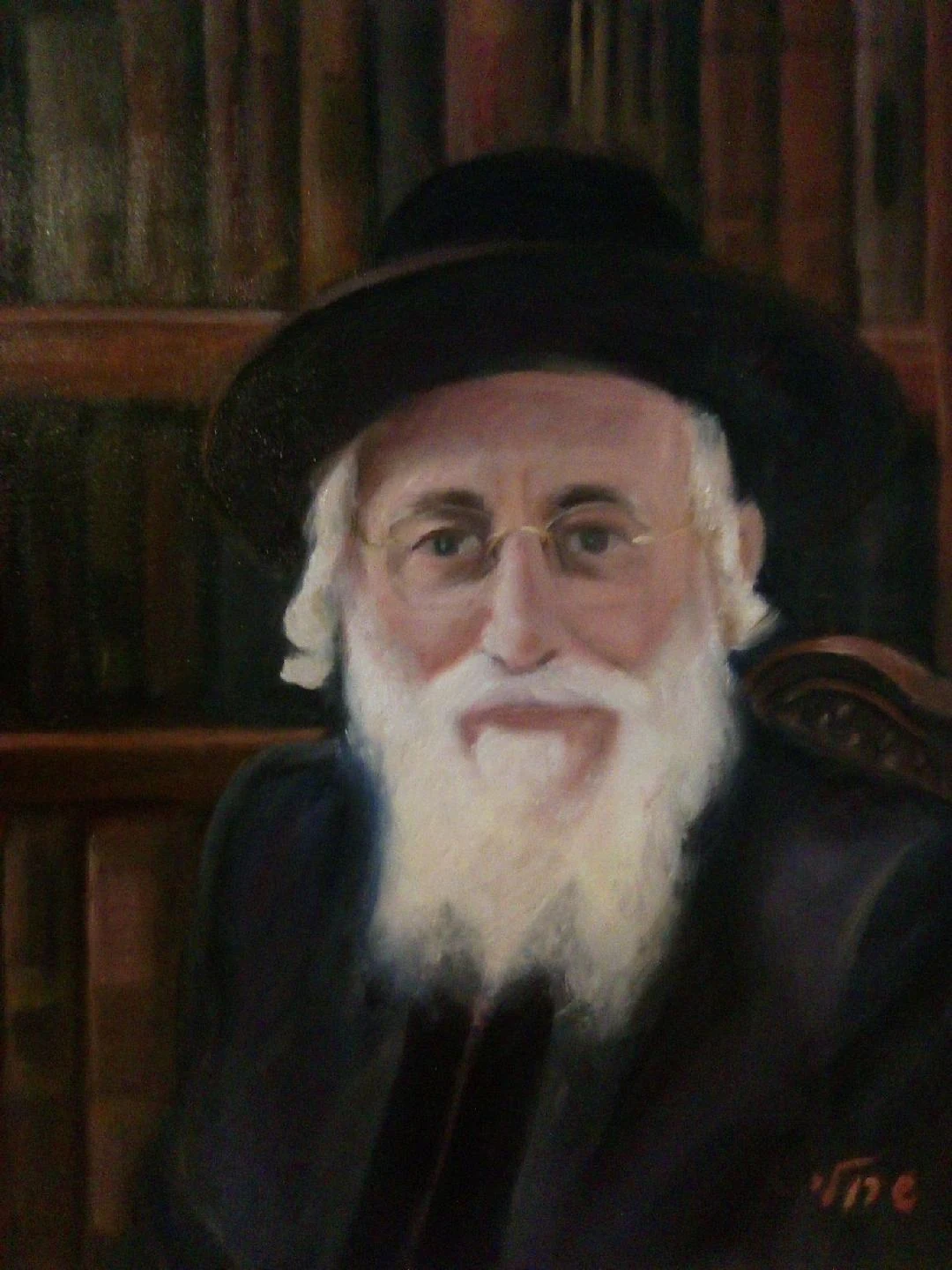
Give the painting a first look without its label
Before reading a title, notice where your eye goes. Is it drawn to the face, a hand, the lightest passage or a sharp boundary between colours? This simple pause can reveal how a painting is organised. A title adds context, but looking first leaves room for your own response.
Follow a gesture
In Rabbi Shlomo Halberstam — In Reflection, the pale hand resting at the forehead and the white beard stand out against dark clothing. A stack of books sits to one side. Look at how those lighter shapes hold your attention and how much of the composition remains quiet.
Portrait with an Open Book offers another arrangement: the face, white sleeves, hands and open pages are set against green. Following the relationship between the hands and book is a way into the picture without needing to identify the sitter.
Compare the setting
In Rabbi Shlomo Halberstam — Among the Books, the close view, glasses, white beard and shelving create a different rhythm from the more open composition of In Reflection. Compare the space around the head and the amount of background you can see.
If the setting interests you, ask the artist how he selected the pose and which details he chose to emphasize. The context of a work can add another dimension to the experience of looking.
Look for a figure, then let it disappear
Two Figures — An Abstract Study keeps recognizable forms within looser passages of blue, cream, pink and red. From a distance, the dark hat and central figure are easier to pick out. Closer looking brings the surrounding marks and changes of colour into view. Try moving between those two ways of seeing rather than deciding that the painting must be either a scene or a purely abstract arrangement.
Ask a question that comes from looking
Useful questions are often specific: how large is the work, how does the surface catch light, and can the artist provide a detail photograph of a particular passage? Asking what prompted a composition can open a conversation with the artist about the choices behind the finished work.
Explore the works side by side, read the artist’s profile, and return to the painting that rewards another look.